Financial institutions are among the most critical pillars of Europe's digital economy. Every day, banks process high volumes of transactions, protect sensitive customer data, and operate digital services that must remain available, trustworthy, and resilient. At the same time, the cyber threat landscape is becoming more sophisticated, with adversaries increasingly leveraging automation, artificial intelligence, and advanced evasion techniques. In this context, digital defense can no longer rely on isolated tools or reactive processes. It requires integrated, intelligent, and collaborative approaches capable of anticipating, detecting, and responding to threats at scale.
Against this backdrop, initiatives like CyberAId offer a practical opportunity to bring next-generation, AI-driven security mechanisms out of the research lab and into the operational reality of the banking sector. The goal is to ensure that these emerging technologies are not designed in a vacuum, but rather validated against the complex constraints, regulatory demands, and daily operations of a highly regulated environment. Ultimately, AI is not a standalone silver bullet, its true value lies in its ability to enrich security data with deep contextual intelligence supporting human analysts, drastically improving triage, and building a more coordinated defense model.
To achieve this, new cybersecurity tools must seamlessly align with established operational models, compliance requirements, and risk management frameworks. By engaging security teams and technical experts from day one, banks can define realistic deployment strategies to ensure AI-driven tools address actual, day-to-day challenges rather than theoretical scenarios.
One of the most promising applications of this technology focuses on anomaly detection and incident response. The goal is to implement integrated systems capable of neutralizing threats that target digital infrastructures and transaction environments. This approach is structured around three main pillars:
- AI-driven context enrichment: Synthesizing information from diverse and disparate data sources to build a comprehensive, high-fidelity view of potential security events. This enriched context significantly improves threat detection accuracy and streamlines the initial triage process by distinguishing real threats from background noise.
- Streamlined incident response: Empowering security teams through Large Language Models (LLMs) and autonomous AI agents. These intelligent agents can assist with triaging alerts, accelerating deep investigations, and executing automated countermeasures to contain threats swiftly.
- Enterprise-wide risk visualization: Delivering a real-time, comprehensive view of the organization's overall security posture.
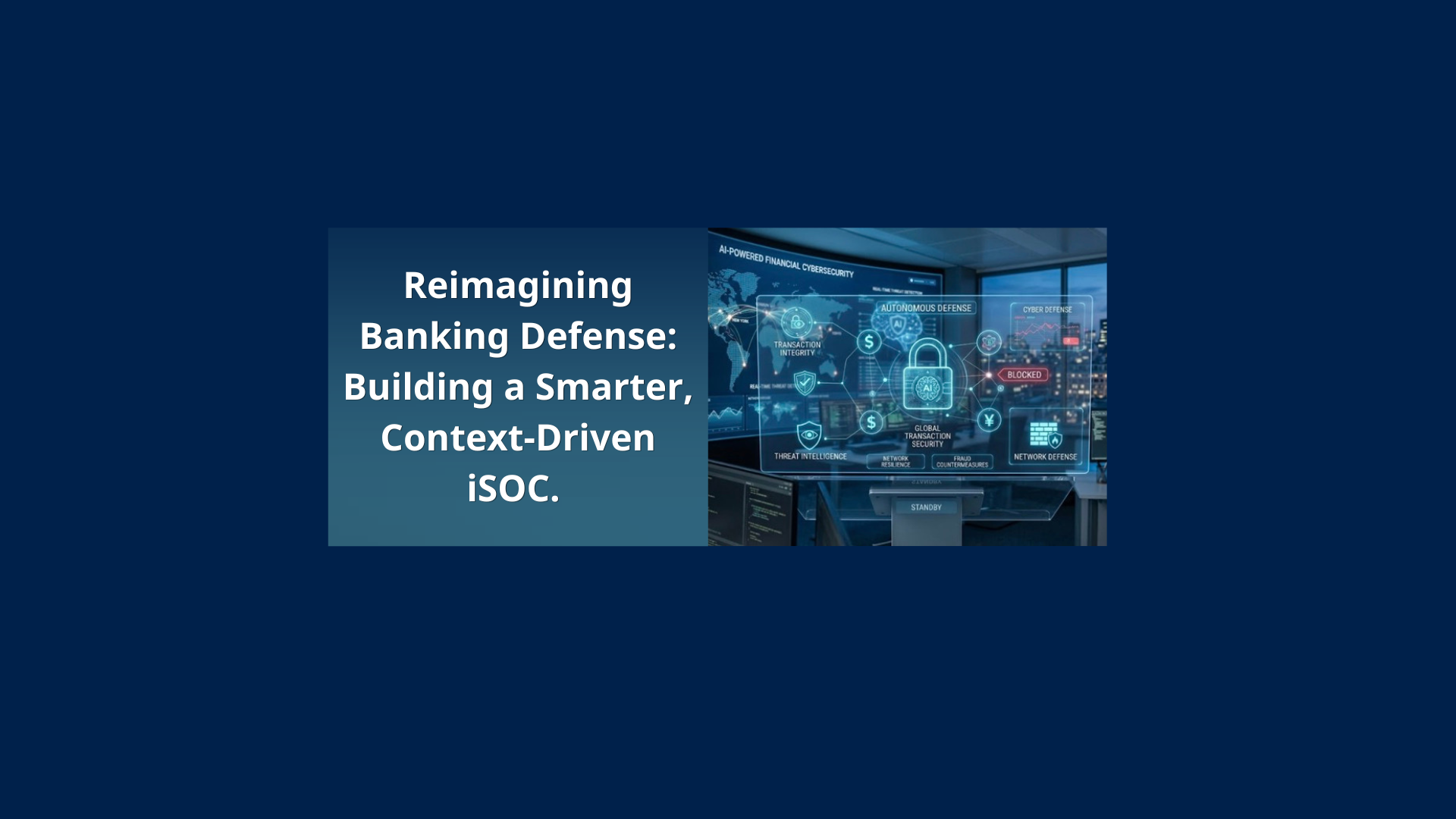
For a modern bank, integrating these capabilities into an Integrated Security Operations Center (iSOC) is paramount. The iSOC serves as the nerve center where monitoring, analysis, and response activities converge. Introducing AI into this ecosystem means augmenting human expertise with intelligent support, rather than replacing it. By automatically feeding analysts enriched contextual data, AI transforms fragmented alerts into a coherent narrative. This is crucial for managing "alert fatigue": it allows the iSOC to drastically reduce false positives so analysts don't waste time chasing ghosts while sharpening the focus on genuine, high-priority threats. Furthermore, real-time monitoring technologies grant deeper visibility into network and system behavior, driving faster detection and improved operational efficiency.
Beyond incident response, true cyber-resilience requires a holistic, proactive strategy. This means going a step further to incorporate measures such as AI-driven penetration testing, vulnerability assessments, privacy-preserving analytics, and secure coding practices. By unifying proactive and reactive mechanisms under an intelligent agentic orchestration layer, modern cybersecurity frameworks can tackle threats in a fully integrated, scalable manner.